The Milky Way Over Waqrapukara
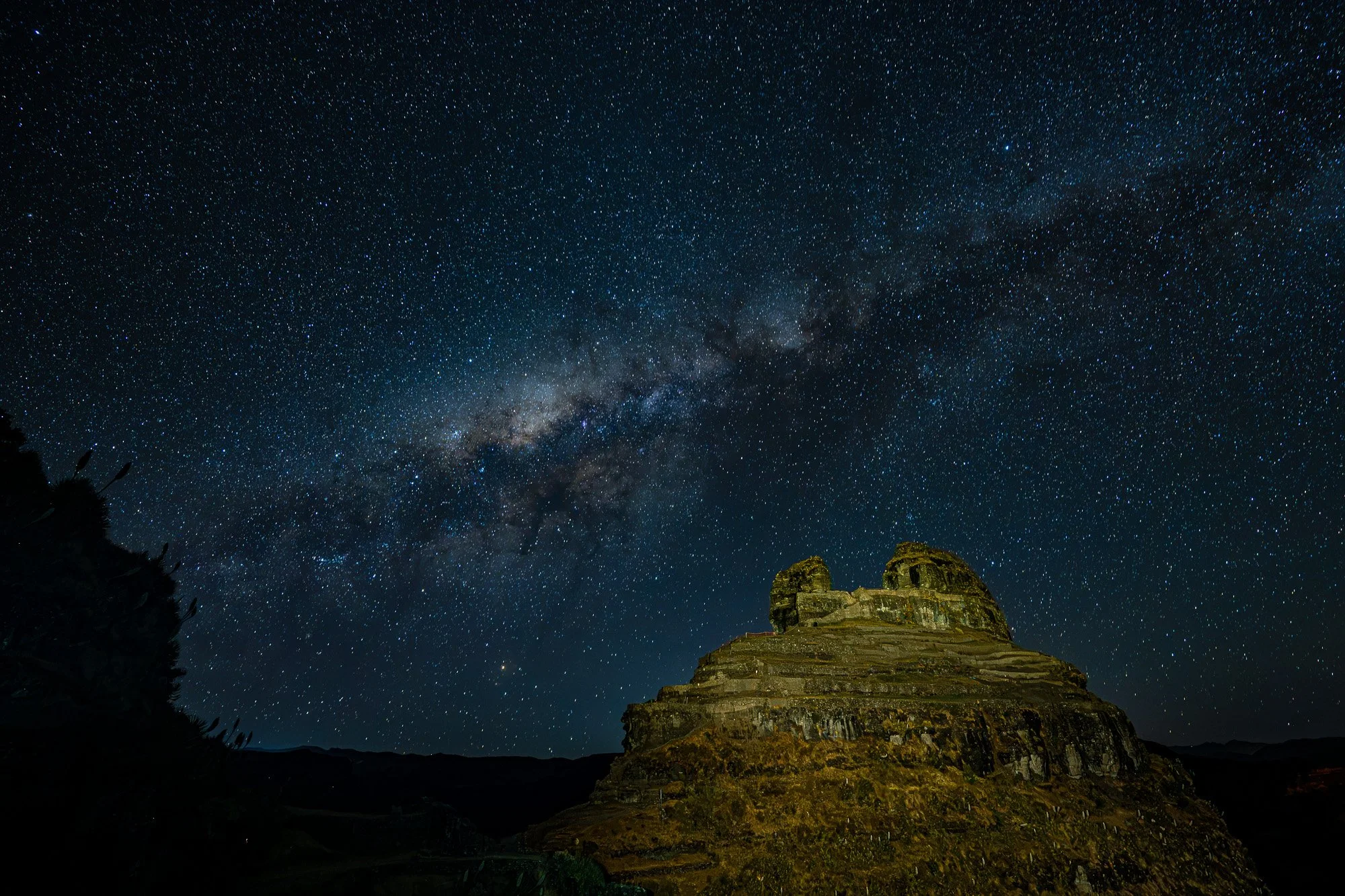
The Milky Way Over Waqrapukara
Greeting & Saludos!
Waqrapukara (pronounced wak-rah-poo-KAH-rah) has been on my list to visit and photograph for a few years now, and back in July I finally made it there. As I near the end of The Condor & The Bull, I've been working through the last pieces of the story, the images I know the book needs before it's complete. One of them was a photograph I had pictured in my mind for a long time: the Milky Way rising over Waqrapukara, and I travelled there for this singular purpose.
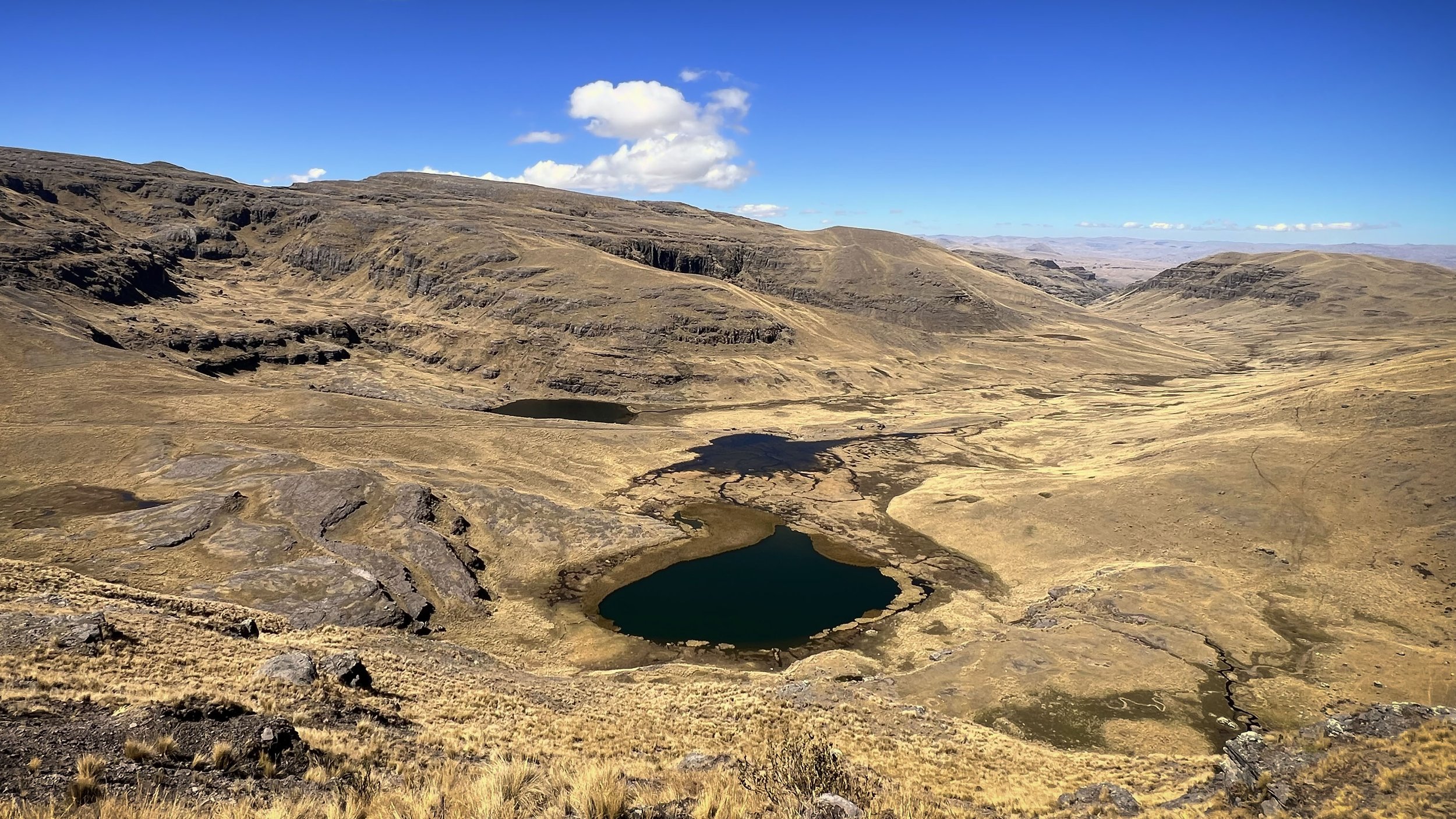
The hike in over the the high plains.
Waqrapukara sits at about 4,300 metres above sea level in the province of Acomayo, south of Cusco, perched high above the canyon of the Apurímac River. It was first built by the Qanchi people and later taken over by the Inca, who kept it as a sanctuary. Today it's widely known as Waqrapukara, "horn fortress" in Quechua, for the two great rock spires that rise from the ridge like the horns of a bull. But there were no bulls in the Andes until the Spanish brought them. The traditional name is Llamapukara, the llama fortress, and the spires are the alert ears of a llama. It's a small detail that says a lot about how the colonial story was layered over an older one, something that sits at the heart of this project. It's also a fitting name for a place so closely tied to the sky, as you'll see.
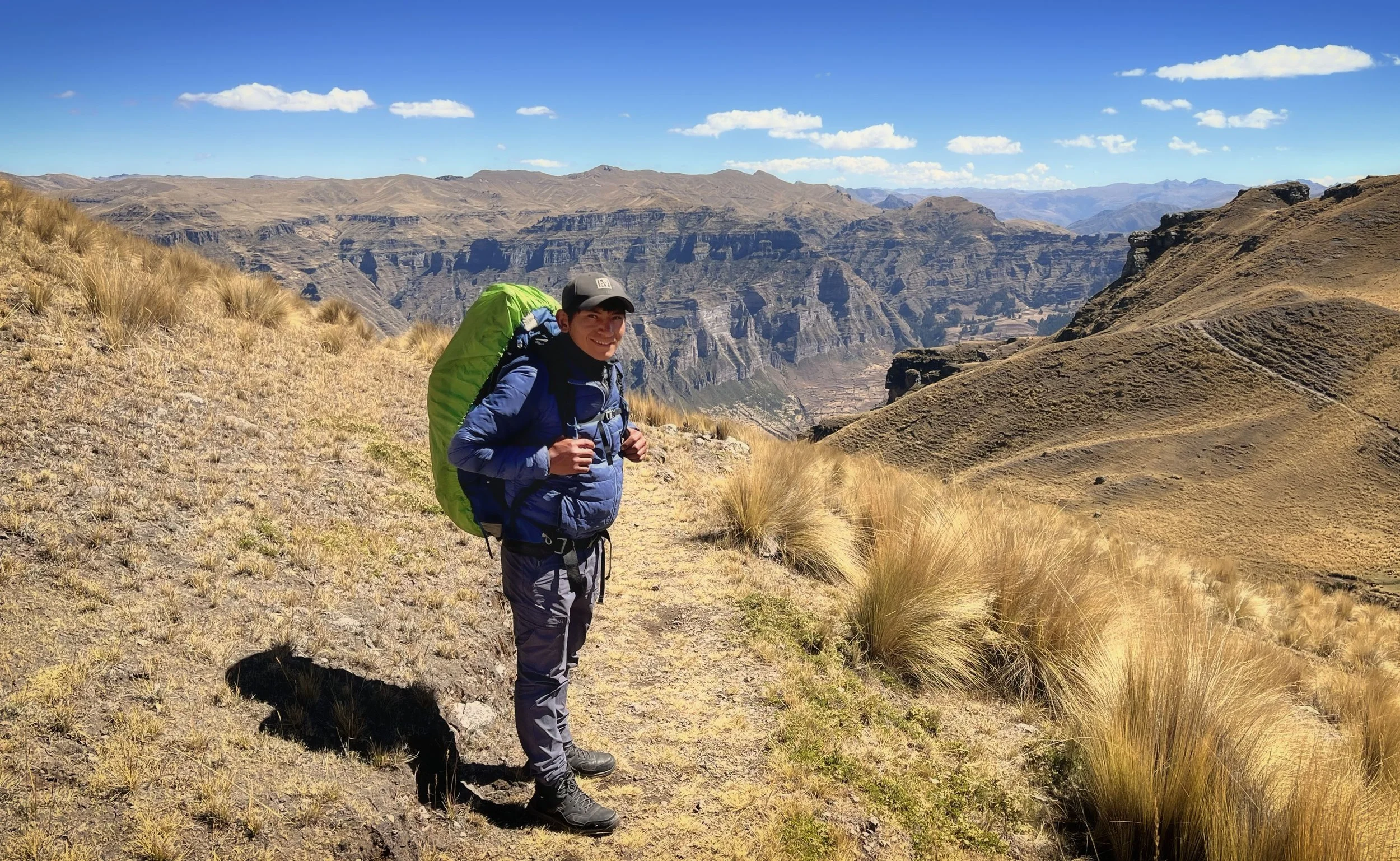
Zeta on the trail to Waqrapukara.
For the Inca, the sky wasn't separate from life on earth. It was a mirror of it. The Milky Way was Mayu, the celestial river, flowing across the night the way the Vilcanota and the Apurímac flow through the valleys below. European astronomers drew their constellations by connecting the stars, but the Andean people also read the dark patches between them, the shadows within the Milky Way. There is Yacana, the great llama, with the two bright stars of Alpha and Beta Centauri as her shining eyes. Nearby are the fox, the toad, the serpent, and the partridge, animals of the Andes living in the river of the sky.
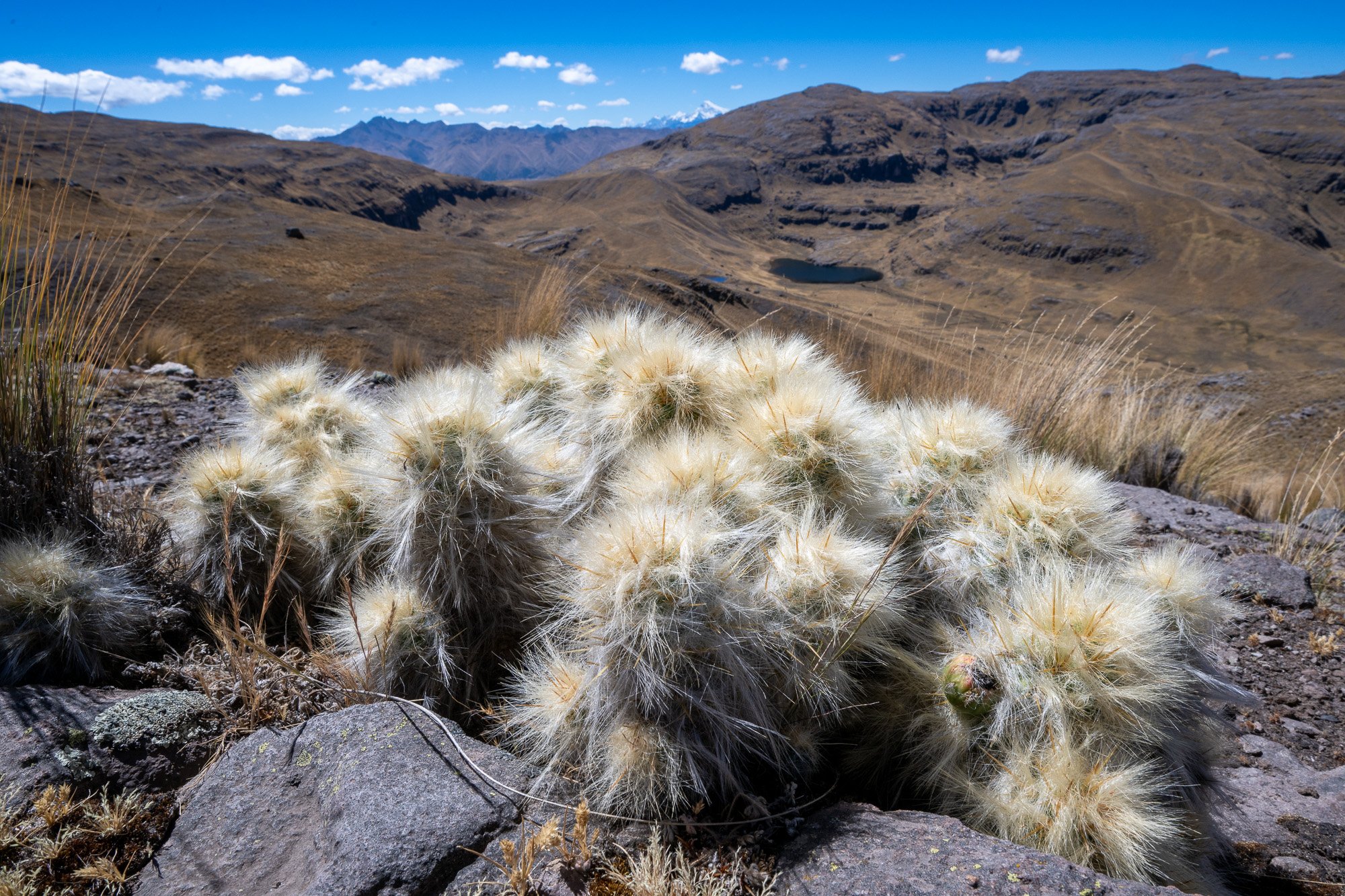
My spirit cactus along the trail looks soft, fuzzy, and inviting, but don’t get too close! :)
The cosmos was woven into everything: when to plant, when to harvest, when to hold ceremony. The Andean world was understood in three layers. Hanan Pacha is the world above, of the sun, moon, and stars. Kay Pacha is this world, where we live. Ukhu Pacha is the world below, of the ancestors and the seeds. The Apus, the sacred mountains, stand between them.
What moves me most is that none of this belongs only to the past. The knowledge has passed through the generations. In highland communities today, farmers still read the stars to know when to plant. Paqos still make offerings to the Apus and Pachamama. Thousands of pilgrims still climb to the glacier at Qoyllur Rit'i, a festival timed to the stars. The sky remains part of how Quechua people understand their place in the world.
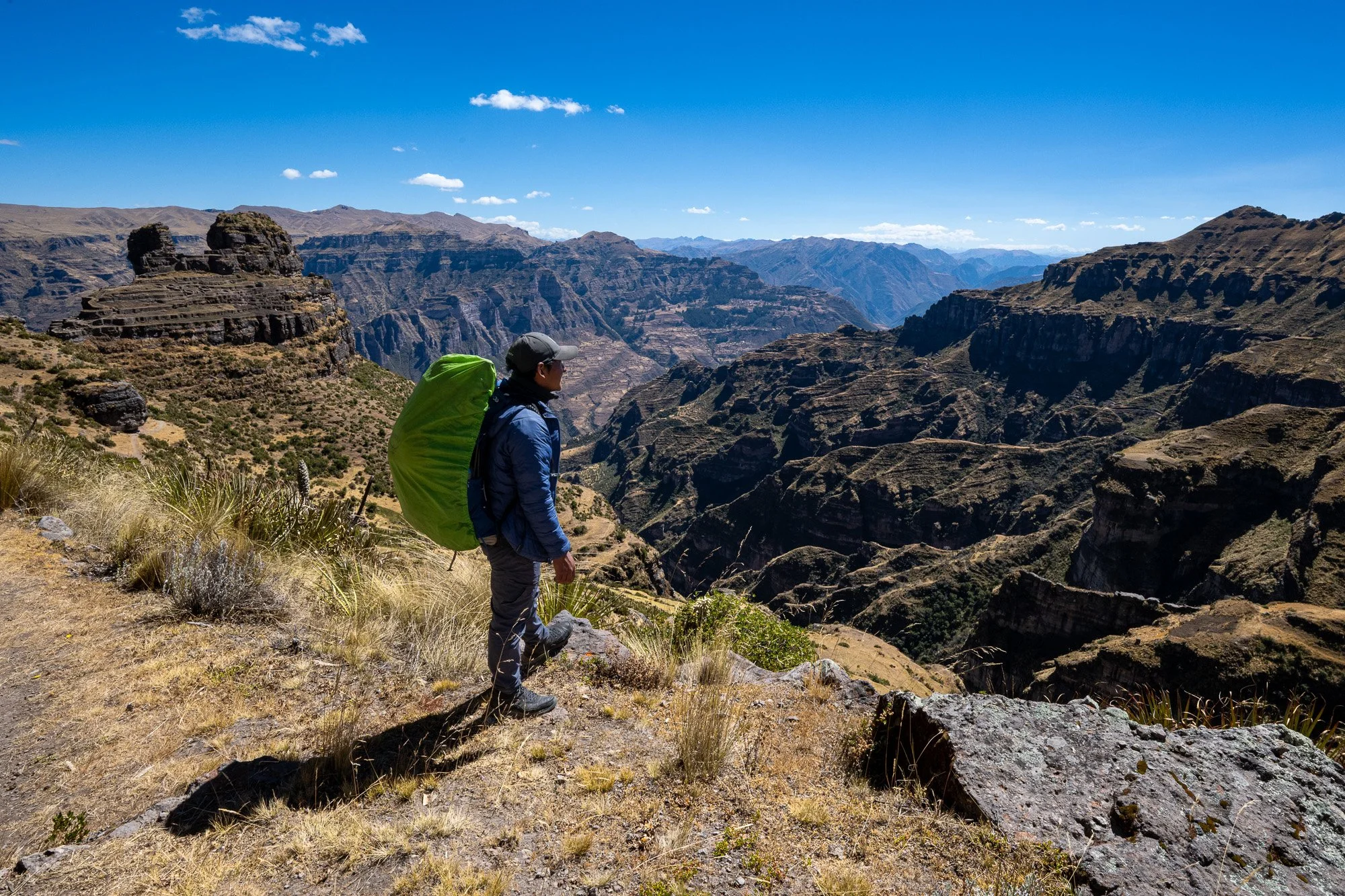
Arriving at Waqrapukara and the Apurimac River Canyon.
Making this image took a lot of planning and a lot of luck. The moon, the weather, the season, and the position of the Milky Way all had to line up on the one night I could be there, and I was very fortunate.
I went with my friend and photo assistant, Zeta. He has been with me on many of the most important trips for this project, and he is the best photo assistant I have ever worked with. He speaks Quechua, Spanish, and English, and the English he taught himself, which still impresses me. He, along with so many others, has been invaluable in making this project possible. As I finish the work and prepare to return to Canada, I've been reflecting on that a lot. It has meant more to me than I can easily put into words, and I'll be writing a post soon about those collaborations and the many people who have helped along the way.
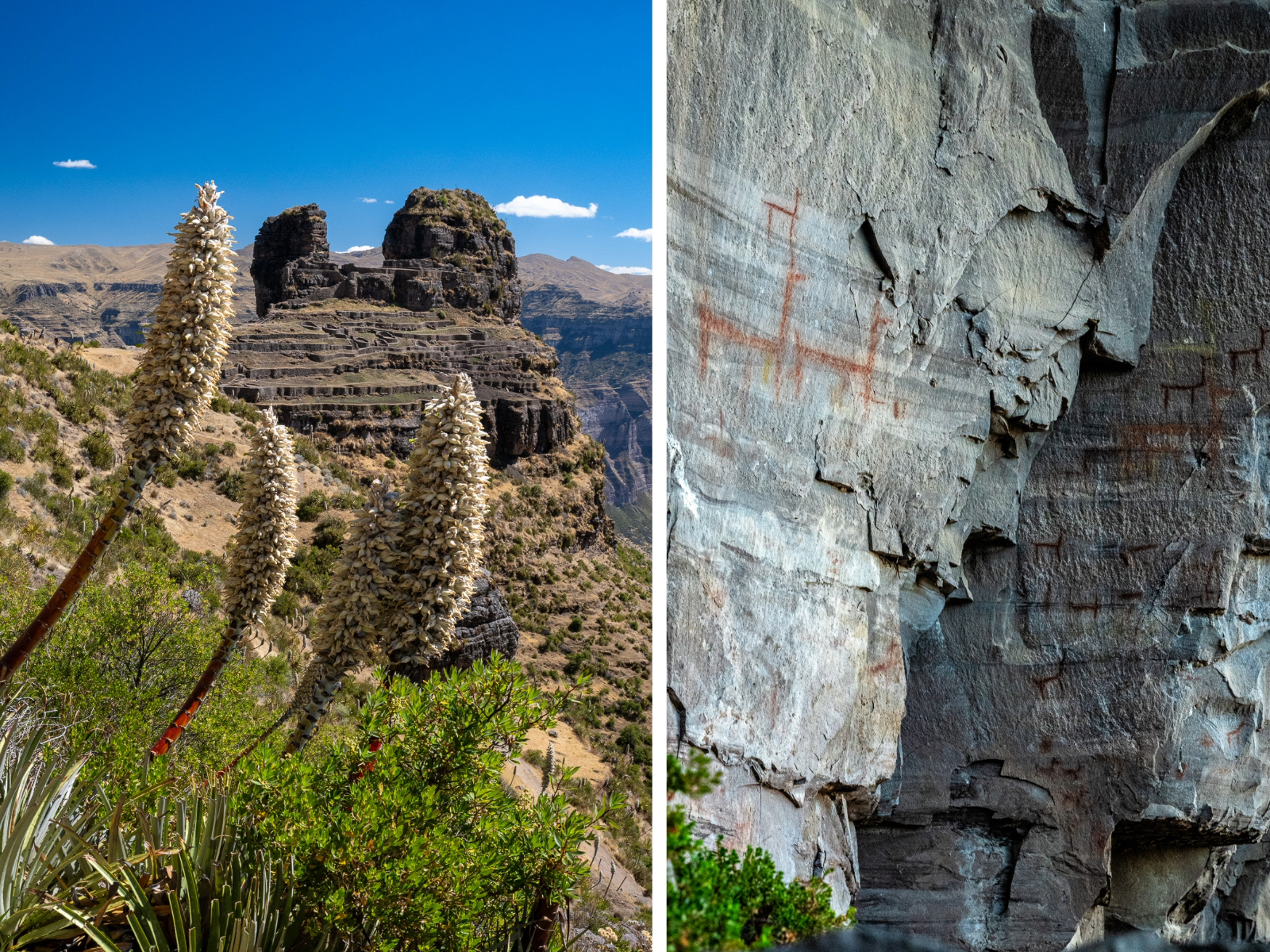
Achupalla, or q’ayara in Quechua, plants along the slopes of Waqrapukara, and a few of the remaining ancient rock paintings not eroded by weather and time.
We hiked in for about three hours and set up for the night. At 4,300 metres, it gets cold, but we found a good sheltered spot and warmed ourselves with calientitos, the traditional highland drink of hot tea and cañazo, a sugarcane liquor. We sat for hours in the silent darkness, watching and waiting. Then Zeta put on some Led Zeppelin (mellow Zep), and we watched the Milky Way slowly swing into position over the spires of Llamapukara. It was magical.
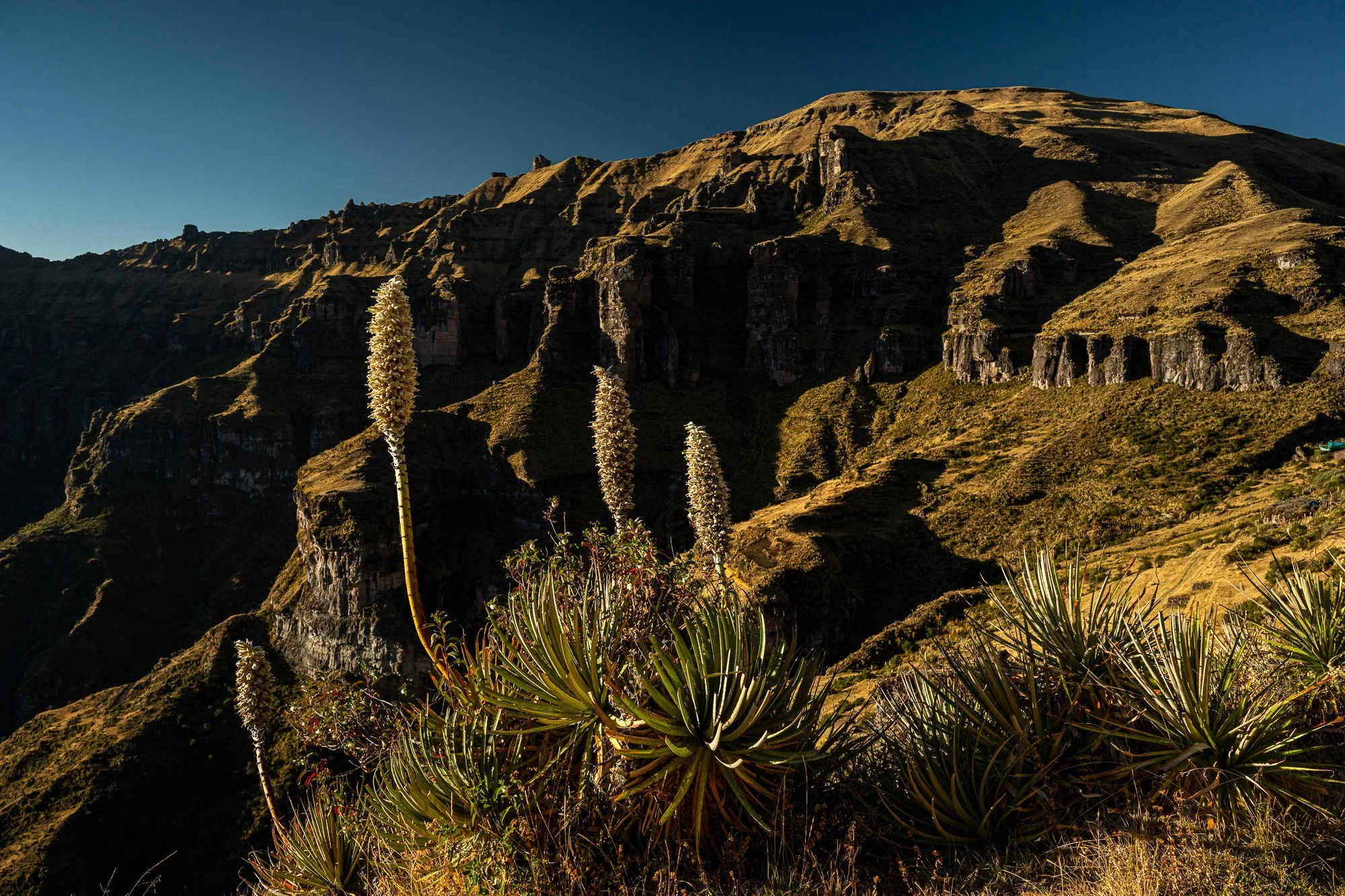
Sunset on the walls of the Apurimac River Canyon.
At about 4:30 in the morning, everything came together. With the Milky Way in just the right place, Zeta and I stood some distance apart with our flashlights and "light painted" the fortress, sweeping soft light across the stone while the camera took in the sky. And there it was, the photo I had come for, and I could finally rest.
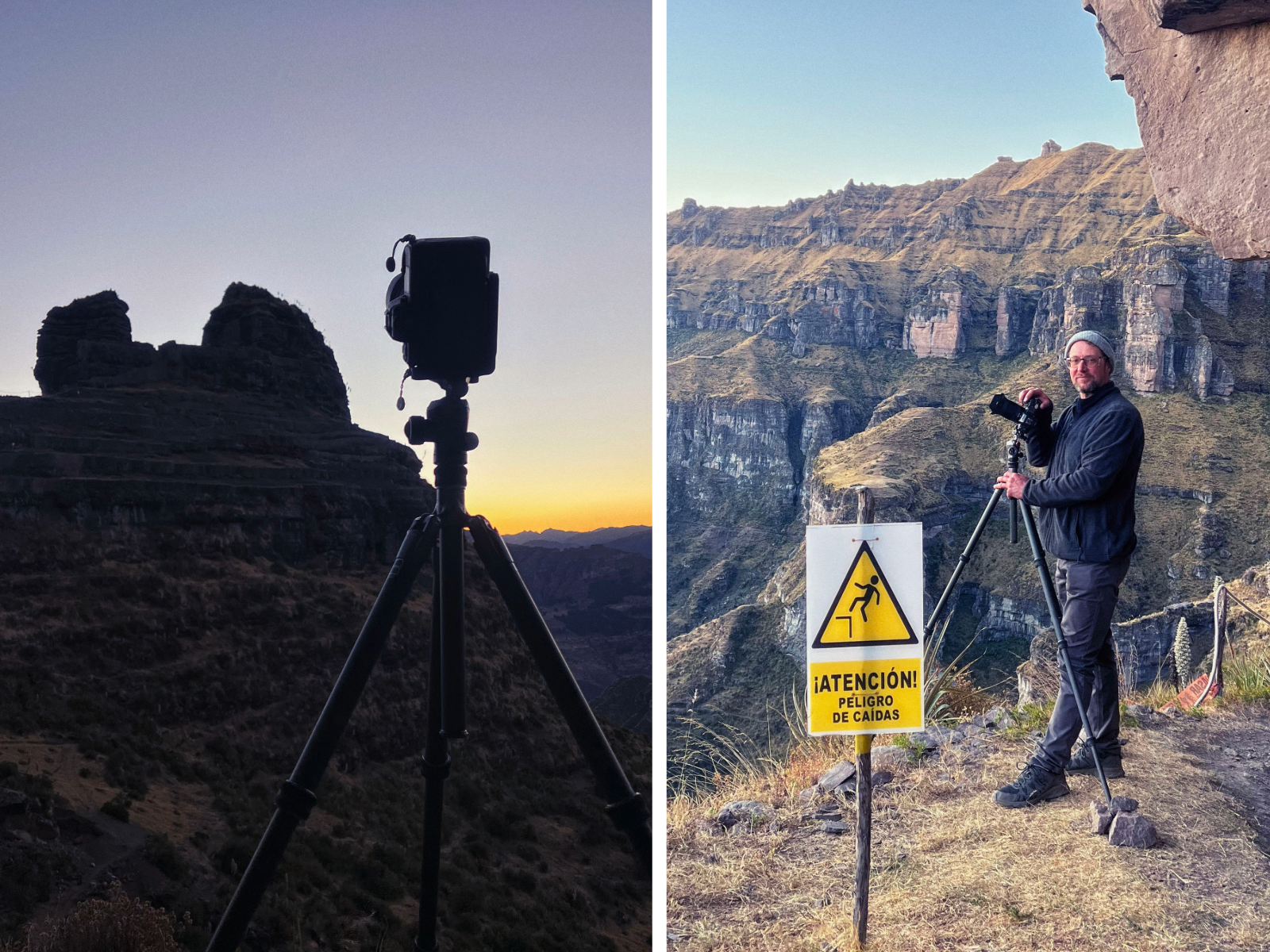
Setting up for the night to get the photo that I came for.
We crashed in the tent for an hour, then got back up for sunrise and a few more photos before packing up and hiking out. It was about three hours again, but this time in a different direction, down into the Apurímac River canyon. It was hard on these old knees, but I'm glad we went down that way and not up it. Apart from the workers at a nearby camp, we were the only ones there. I feel lucky about that, because those workers are building a road that will soon be finished. It will bring loads of tourists, and Waqrapukara will change. I'm grateful to have seen it and photographed it in the silence.
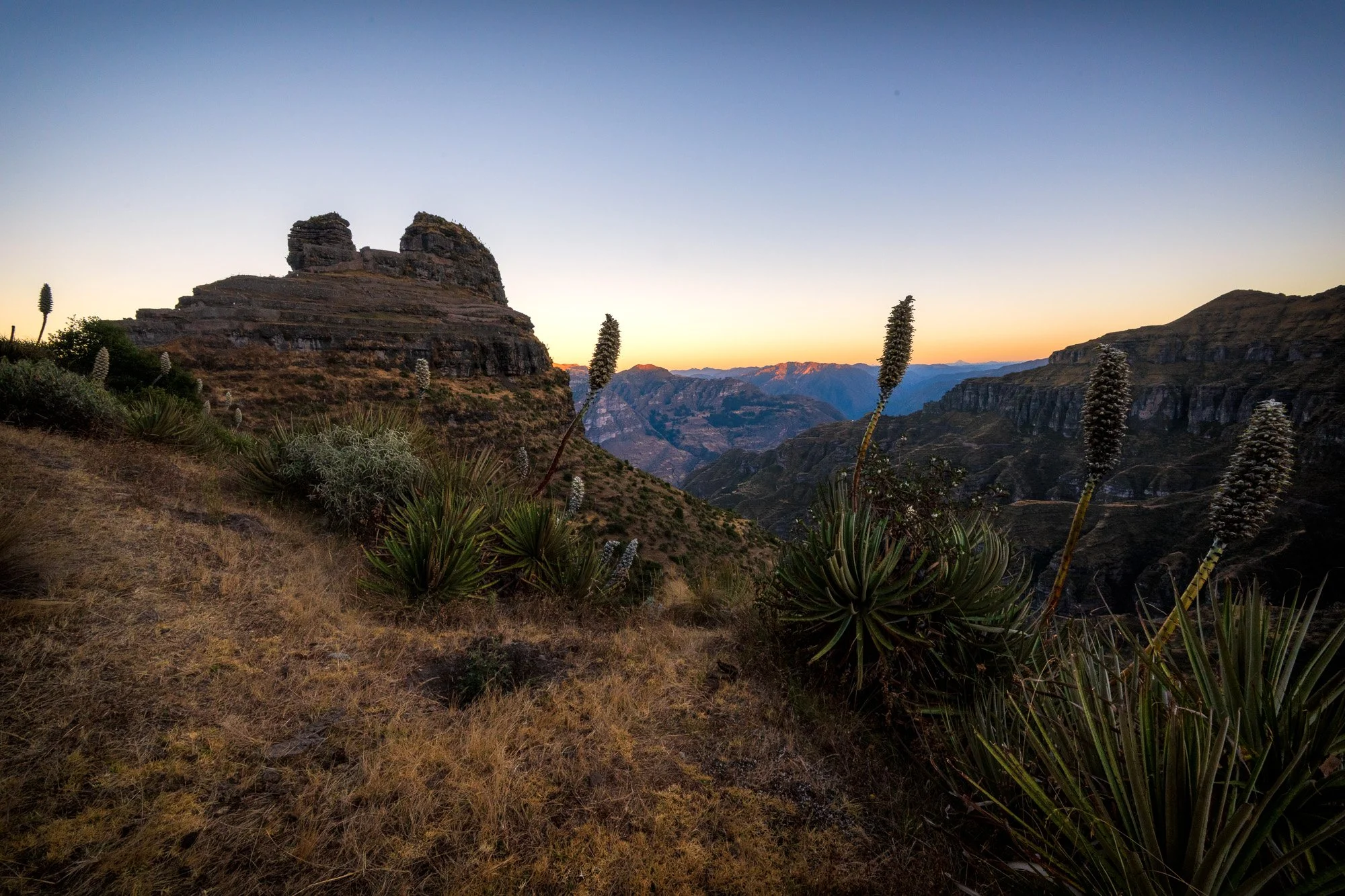
Sunrise on the “horns” of Waqrapukara
Nearing the finish line
Nights like this one remind me how close The Condor & The Bull is to being complete. Only a few important image series remain, and as those last shoots come together, design for the photobook is getting underway. It's an exciting moment, and one I've been working toward for years.
The project has been entirely self-funded so far, and to help carry it across the finish line, I'm selling a 2027 calendar. This one features nature and wildlife images from my Canadian archives, chosen in a recent Facebook poll. All proceeds go directly toward completing the remaining photography for the book.
The calendar is available by pre-order only until October 28, and it will ship in November. You can view the calendar and place your pre-order at the link in this photo:
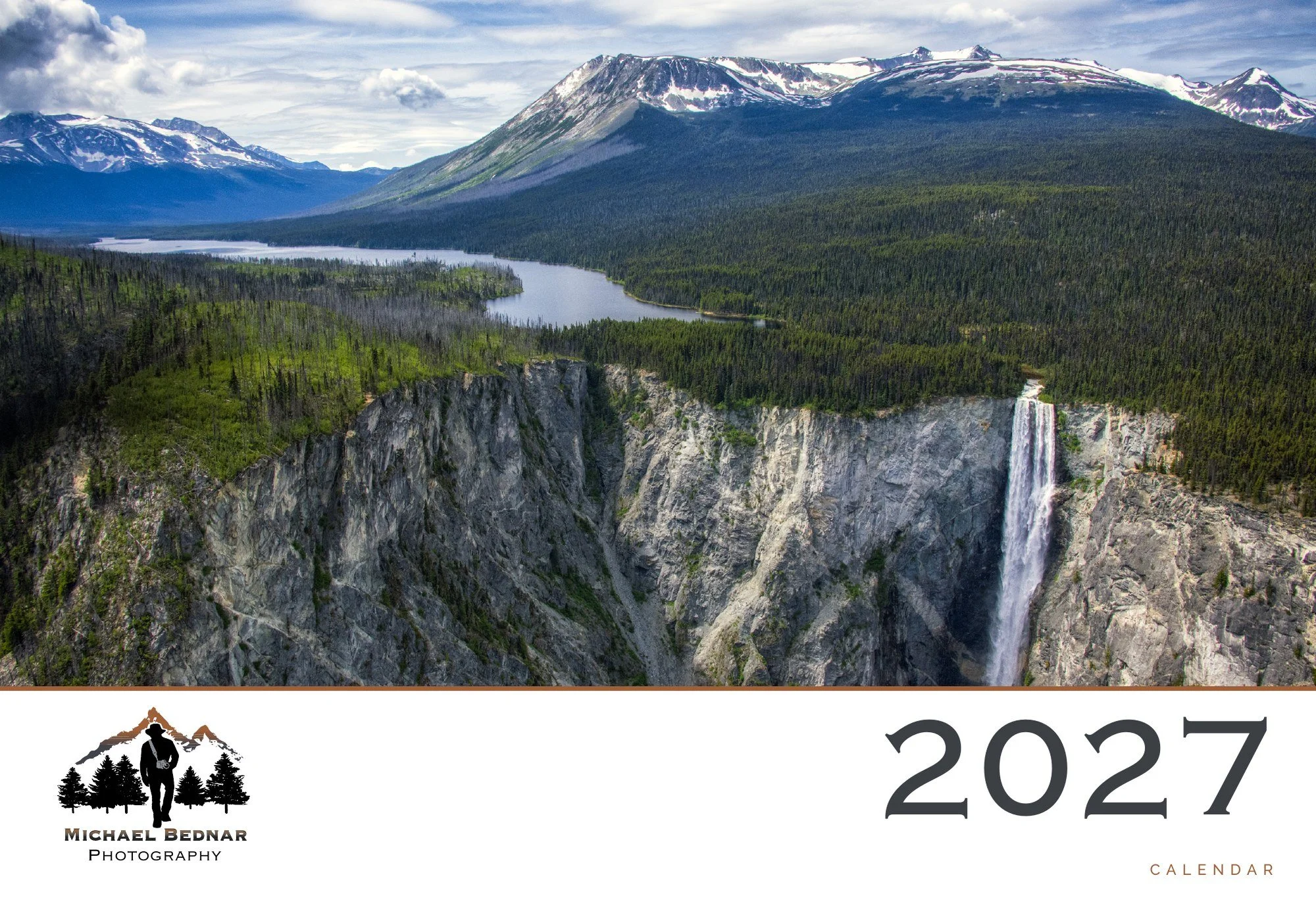
2027 Calendar (click on the photo to view and order)
And next year, I'll be making a calendar of images from the Peru project, timed with the launch of the photobook.
Thank you to everyone who has supported this work in so many ways. It truly takes a village.
As always, I would love to hear any thoughts or questions you have. Leave a comment below, or if you are shy, you can send a message! :)
With gratitude,
MB